

Aluminum bottles have gained significant popularity in recent years due to their numerous advantages, such as being lightweight, recyclable, and offering excellent protection against external elements. As a trusted supplier of aluminum bottles, I am often asked about the materials used in their production. In this blog post, I will delve into the various materials involved in making an aluminum bottle, shedding light on their properties and contributions to the final product.

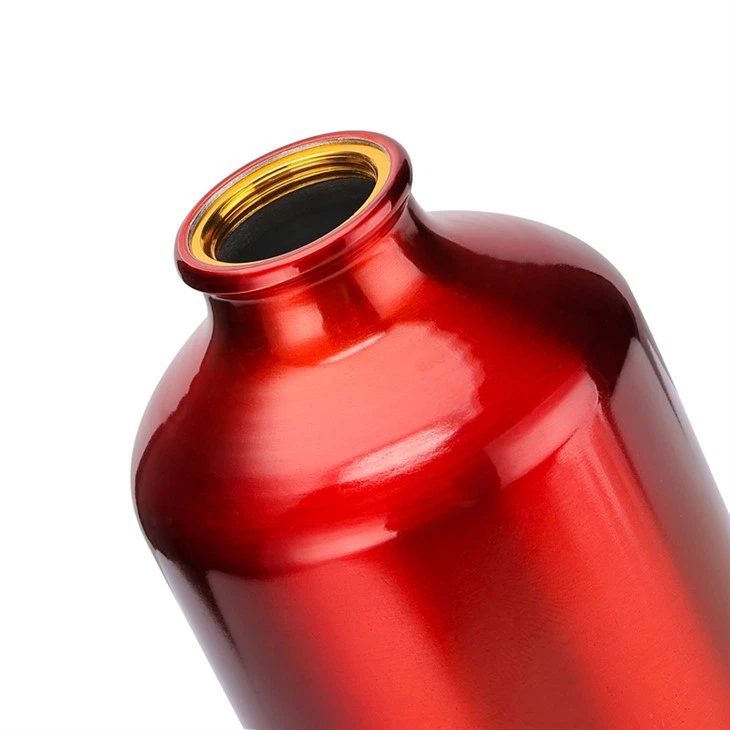
Primary Material: Aluminum Alloy
The core material of an aluminum bottle is, of course, aluminum. However, pure aluminum is relatively soft and lacks the necessary strength and durability for bottle applications. Therefore, aluminum alloys are used instead. These alloys are created by combining aluminum with other elements, such as copper, magnesium, manganese, silicon, and zinc, to enhance specific properties.
One of the most commonly used aluminum alloys for bottle production is the 3000 series, specifically 3004. This alloy contains manganese as the primary alloying element, which provides good formability, corrosion resistance, and moderate strength. The 3004 alloy is well-suited for the deep drawing process used to shape aluminum bottles, allowing for the creation of complex geometries with thin walls while maintaining structural integrity.
Another alloy that is sometimes used is the 5000 series, particularly 5052. This alloy contains magnesium as the main alloying element, offering higher strength and better corrosion resistance in marine environments. While not as commonly used for standard aluminum bottles, the 5052 alloy may be preferred for applications where enhanced durability and resistance to harsh conditions are required.
Inner Coating
To prevent the aluminum from coming into direct contact with the contents of the bottle and to protect the flavor and quality of the product, an inner coating is applied. The inner coating also helps to prevent corrosion of the aluminum, especially when the bottle is used to store acidic or alkaline substances.
There are several types of inner coatings used in aluminum bottles, including epoxy-based coatings and polyester-based coatings. Epoxy coatings are known for their excellent adhesion, chemical resistance, and barrier properties. They form a tight seal between the aluminum and the contents of the bottle, preventing any interaction between the two. Polyester coatings, on the other hand, offer good flexibility and are often used for applications where the bottle may be subjected to bending or deformation.
In addition to epoxy and polyester coatings, some aluminum bottles may also use a combination of different coatings or special formulations to meet specific requirements. For example, bottles used to store carbonated beverages may require a coating that can withstand the pressure and carbonation of the drink without delaminating or cracking.
Outer Coating
The outer coating of an aluminum bottle serves both aesthetic and protective purposes. It provides a smooth and attractive finish, enhancing the visual appeal of the bottle and making it more appealing to consumers. The outer coating also helps to protect the aluminum from scratches, abrasions, and environmental damage, extending the lifespan of the bottle.
There are various types of outer coatings available, including lacquers, paints, and printing inks. Lacquers are clear or colored coatings that are applied to the surface of the aluminum to provide a glossy or matte finish. They offer good scratch resistance and can be customized with different colors and effects. Paints, on the other hand, are thicker coatings that can provide more coverage and protection. They are often used for applications where a more durable and long-lasting finish is required.
Printing inks are used to add labels, logos, and other graphics to the outer surface of the aluminum bottle. These inks are designed to adhere well to the outer coating and to withstand the rigors of handling and transportation. They can be applied using a variety of printing techniques, such as screen printing, offset printing, and digital printing.
Closure
The closure is an important component of an aluminum bottle, as it seals the contents of the bottle and prevents leakage. There are several types of closures used for aluminum bottles, including screw caps, snap caps, and corks.
Screw caps are the most common type of closure used for aluminum bottles. They are easy to use and provide a tight seal, preventing any leakage or spillage. Screw caps can be made from a variety of materials, including plastic, metal, and rubber. Plastic screw caps are lightweight and inexpensive, while metal screw caps offer more durability and a higher-end look. Rubber gaskets are often used inside the screw caps to provide an additional seal and to prevent any air or liquid from escaping.
Snap caps are another type of closure that is commonly used for aluminum bottles. They are designed to snap onto the top of the bottle, providing a secure and easy-to-open closure. Snap caps are often used for bottles that are intended for single-use or for applications where a quick and convenient closure is required.
Corks are a traditional type of closure that is sometimes used for aluminum bottles, especially for high-end or specialty products. Corks provide a natural and elegant look, and they can also help to preserve the flavor and quality of the contents of the bottle. However, corks may require special handling and storage to prevent them from drying out or becoming moldy.
Labeling and Decoration
Labeling and decoration are important aspects of aluminum bottle design, as they help to attract consumers and to communicate the brand and product information. There are several methods of labeling and decoration used for aluminum bottles, including direct printing, shrink sleeves, and adhesive labels.
Direct printing involves printing the labels, logos, and other graphics directly onto the surface of the aluminum bottle using a printing process such as screen printing or digital printing. Direct printing offers a high-quality and durable finish, and it can be customized with different colors, fonts, and designs.
Shrink sleeves are plastic sleeves that are printed with labels, logos, and other graphics and then shrunk onto the surface of the aluminum bottle using heat. Shrink sleeves provide a full-wrap coverage of the bottle, allowing for maximum branding and decoration. They are also easy to apply and can be customized with different shapes and sizes.
Adhesive labels are pre-printed labels that are attached to the surface of the aluminum bottle using an adhesive. Adhesive labels are a cost-effective and versatile option for labeling and decoration, and they can be customized with different materials, finishes, and sizes.
Conclusion
In conclusion, the materials used to make an aluminum bottle are carefully selected to ensure the quality, durability, and functionality of the product. The primary material, aluminum alloy, provides the strength and structure of the bottle, while the inner and outer coatings protect the contents and the aluminum from corrosion and damage. The closure seals the contents of the bottle and prevents leakage, and the labeling and decoration help to attract consumers and communicate the brand and product information.
As a supplier of aluminum bottles, I am committed to using the highest quality materials and the latest manufacturing techniques to produce aluminum bottles that meet the needs and expectations of our customers. Whether you are looking for a standard aluminum bottle or a custom-designed solution, we have the expertise and resources to provide you with the perfect product.
If you are interested in purchasing aluminum bottles for your business, I encourage you to [contact us] for more information and to discuss your specific requirements. We offer a wide range of aluminum bottles in different sizes, shapes, and designs, including 600ml Aluminum Water Bottles, Aluminum Outdoor Water Bottle, and Outdoor Aluminum Water Bottle. Our team of experts will be happy to assist you in selecting the right product for your needs and to provide you with a competitive quote.
References
- Aluminum Association. (n.d.). Aluminum Alloys. Retrieved from https://www.aluminum.org/
- Can Manufacturers Institute. (n.d.). The Aluminum Can: A Sustainable Packaging Solution. Retrieved from https://www.cancentral.com/
- European Aluminium Foil Association. (n.d.). Aluminium Packaging. Retrieved from https://www.eafo.org/