

As an established supplier of aluminium bottles, I am delighted to walk you through the intricate yet fascinating production process of these versatile containers. Aluminium bottles have gained significant popularity in recent years due to their durability, lightweight nature, and eco - friendly properties. In this blog, we'll delve into each step of the production process to understand how these bottles are made from raw aluminium to the final product ready for the market.
Step 1: Raw Material Sourcing
The first step in the production of aluminium bottles is sourcing the raw material. Aluminium is a highly abundant metal, and it is typically sourced from bauxite ore, which is mined in various parts of the world. Once the bauxite is mined, it undergoes a refining process to extract alumina. Through a process called electrolysis, alumina is further converted into pure aluminium.
As a responsible supplier, we ensure that our raw materials are sourced ethically and meet the highest quality standards. Our suppliers are carefully vetted to guarantee that the aluminium we use is of the appropriate grade for bottle production, with the necessary strength and malleability.
Step 2: Sheet Metal Production
After obtaining pure aluminium, it is processed into sheets. The aluminium goes through a rolling mill, where it is repeatedly passed through large rollers to reduce its thickness and increase its width. This process, known as hot rolling or cold rolling depending on the temperature, results in aluminium sheets of the desired thickness for bottle production.
The thickness of the sheet is crucial as it affects the strength and weight of the final bottle. For our Aluminum Sports Water Bottle, we use sheets with a specific thickness that provides a good balance between durability and portability.
Step 3: Blanking
Once the aluminium sheets are ready, the next step is blanking. Blanking is the process of cutting out circular pieces, known as blanks, from the aluminium sheet. These blanks will serve as the starting point for forming the bottles. Specialized cutting tools are used to ensure precise and clean cuts, minimizing waste and ensuring that each blank has the correct diameter for the intended bottle size.
Step 4: Cup Forming
The blanks are then transformed into cups through a process called cup forming. This is typically done using a mechanical press. The blank is placed in a die, and a punch presses down on it, forcing the aluminium to take the shape of the die cavity. This creates a shallow cup - shaped piece, which is the initial form of the bottle body.
The cup forming process requires careful control of pressure and speed to ensure that the cups are formed evenly without any cracks or defects. Our advanced machinery and experienced operators allow us to achieve high - quality cup formation consistently.
Step 5: Ironing
After the cup forming, the cups go through an ironing process. Ironing is used to reduce the wall thickness of the cup and increase its height. The cup is placed over a mandrel and passed through a series of ironing rings. As the cup moves through these rings, the aluminium is stretched and the wall thickness is gradually reduced.
This process is critical for achieving the desired thin - walled structure of the aluminium bottle, which not only makes the bottle lighter but also helps in cost - efficiency. The ironing process also gives the bottle a smooth and uniform wall surface.
Step 6: Trimming
Once the ironing process is complete, the top of the bottle may have some excess material or irregular edges. Trimming is carried out to remove these unwanted parts and give the bottle a clean, uniform top edge. Precision trimming ensures that the bottle meets the required specifications and is ready for further processing.
Step 7: Necking and Threading
Necking is the process of reducing the diameter of the top part of the bottle to form a neck. Specialized necking tools are used to gradually compress the aluminium to achieve the desired neck size. After necking, threading is done on the neck of the bottle. This is essential as it allows the bottle to be sealed with a cap or closure.
The threading process must be accurate to ensure a proper fit between the bottle and the cap. Our threading methods ensure a tight seal, preventing leakage and maintaining the quality of the contents inside the bottle.
Step 8: Internal Coating
To protect the contents of the bottle from reacting with the aluminium and to prevent the aluminium from corroding, an internal coating is applied. The coating is a thin layer of food - grade material that creates a barrier between the aluminium and the liquid or product inside the bottle.
This coating is applied using a spraying or dipping method. The coated bottle is then cured at a specific temperature to ensure that the coating adheres properly and forms a durable, protective layer.
Step 9: External Decoration
Once the internal coating is complete, the external decoration of the bottle can begin. This step is crucial for enhancing the visual appeal of the bottle and promoting brand recognition. There are several methods of external decoration, including printing, labeling, and embossing.

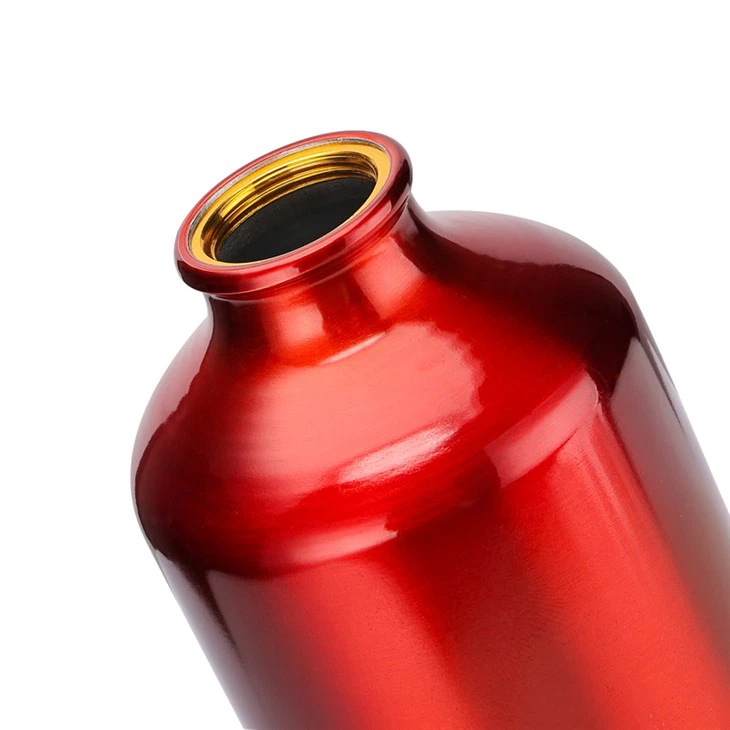
Printing can be done using various techniques such as lithography or digital printing, allowing for high - quality, full - color designs. Labels can be applied to the bottle for a quick and easy branding solution. Embossing creates a raised pattern on the surface of the bottle, adding a tactile and unique element to the design. Our Aluminum Outdoor Water Bottle often features custom - printed designs to meet the specific needs of our clients.
Step 10: Quality Control
Before the bottles are ready for shipment, a comprehensive quality control process is carried out. This includes inspecting the bottles for any visible defects such as dents, scratches, or uneven surfaces. The bottles are also tested for functionality, including the integrity of the seal, the strength of the structure, and the quality of the coating.
Samples are taken from each production batch and tested in our in - house laboratories to ensure that they meet all the relevant industry standards and customer requirements. Only those bottles that pass the strict quality control checks are selected for delivery.
Step 11: Packaging and Shipping
The final step in the production process is packaging and shipping. The aluminium bottles are carefully packed in boxes or crates to protect them during transit. We use packaging materials that are both sturdy and environmentally friendly.
Once the bottles are packaged, they are shipped to our customers around the world. Our logistics team ensures that the shipments are delivered on time and in good condition, providing a seamless service from production to delivery.
As a leading supplier of aluminium bottles, we are committed to providing high - quality products that meet the diverse needs of our customers. Our Sports Aluminum Bottle range is just one example of our innovative and reliable product offerings. Whether you are a beverage manufacturer, a sports brand, or an outdoor equipment company, we have the expertise and capacity to supply you with the perfect aluminium bottles.
If you are interested in purchasing aluminium bottles for your business, we invite you to contact us for a detailed discussion. Our sales team is ready to assist you with product selection, customization options, and pricing information. We look forward to the opportunity to partner with you and contribute to the success of your brand.
References
- "Aluminium Production and Processing" - International Aluminium Institute
- "Manufacturing Processes for Engineering Materials" - Serope Kalpakjian and Steven Schmid
- "Packaging Technology" - Owen R. Cosgrove