

Can I use a stainless steel vacuum coffee mug for lemonade?
As a supplier of stainless steel vacuum coffee mugs, I often get asked a wide range of questions from our customers. One of the most common queries is whether it's okay to use our stainless steel vacuum coffee mugs for lemonade. This is a valid question, considering the unique properties of both stainless steel and lemonade. In this blog post, I'll delve into the science behind it and provide you with a comprehensive answer.
First, let's understand the properties of stainless steel. Stainless steel is an alloy primarily composed of iron, chromium, and often nickel. The chromium in stainless steel forms a thin, invisible layer of chromium oxide on the surface. This layer acts as a protective barrier, preventing the steel from rusting and corroding. It's this property that makes stainless steel a popular choice for kitchenware, including coffee mugs.
On the other hand, lemonade is an acidic beverage. Lemons are rich in citric acid, which gives lemonade its characteristic tangy taste. Acids have the potential to react with certain metals, leading to corrosion and the leaching of metal ions into the beverage. This raises concerns about whether storing lemonade in a stainless steel vacuum coffee mug is safe.
However, not all stainless steels are the same. Most high - quality stainless steel vacuum coffee mugs, like the ones we supply, are made from food - grade stainless steel, usually 304 or 316 stainless steel. These grades are specifically designed for contact with food and beverages. They have excellent corrosion resistance, even when exposed to acidic substances like lemonade.
304 stainless steel contains at least 18% chromium and 8% nickel. The chromium forms that protective oxide layer, and the nickel enhances the corrosion - resistance properties of the steel. 316 stainless steel, on the other hand, has even better corrosion resistance, thanks to the addition of molybdenum. It's often used in more demanding environments, such as marine applications and in products that will come into contact with more aggressive chemicals.
In normal circumstances, using a food - grade stainless steel vacuum coffee mug to hold lemonade is perfectly safe. The protective oxide layer on the stainless steel surface is stable and can withstand the acidic environment of lemonade for a reasonable period. You can store lemonade in your stainless steel mug for several hours without significant corrosion occurring.
But there are a few factors to keep in mind. Firstly, the longer the lemonade stays in the mug, the greater the chance of a reaction occurring. If you leave lemonade in the mug for days on end, the acid may gradually break down the protective oxide layer over time. This could lead to minor corrosion and the potential for metal ions to leach into the lemonade.
Secondly, the temperature also plays a role. Higher temperatures can accelerate chemical reactions. If you store hot lemonade in the stainless steel mug, the reaction between the acid and the steel may occur more quickly than if the lemonade is cold. So, it's advisable to consume your lemonade within a reasonable time frame, especially if it's hot.
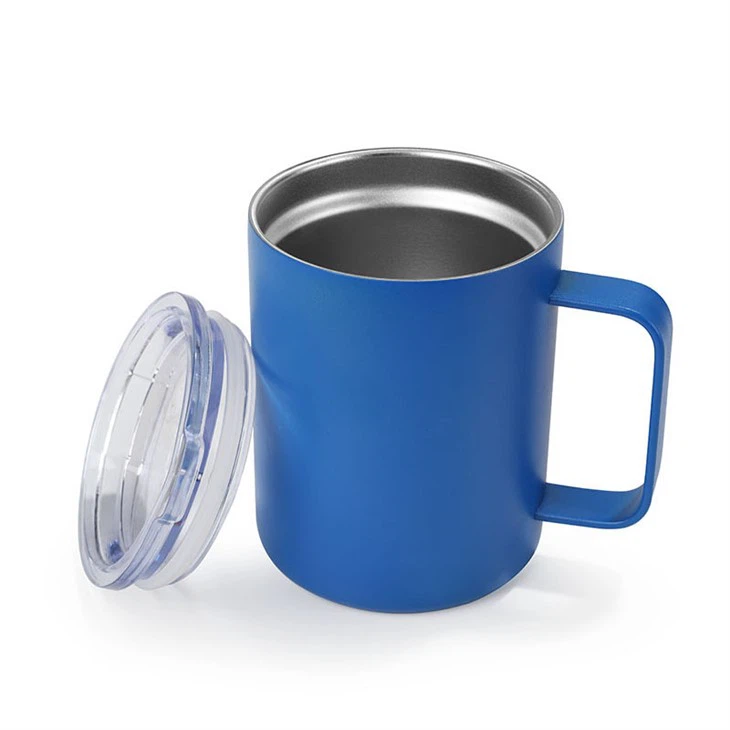

Another aspect to consider is the condition of the mug. If the surface of the stainless steel is scratched or damaged, the protective oxide layer may be compromised. This exposes the underlying metal to the acidic lemonade, increasing the risk of corrosion. Therefore, it's important to handle your stainless steel vacuum coffee mug with care and avoid using abrasive cleaners that could scratch the surface.
Now, let's talk about the benefits of using a stainless steel vacuum coffee mug for lemonade. One of the main advantages is the excellent insulation properties. Our Stainless Steel Coffee Mug Cup is designed with a vacuum - insulated wall, which helps to keep your lemonade cold for hours. This is great for taking your lemonade on the go, whether you're going for a hike, to the beach, or just running errands.
The durability of stainless steel is another plus. Unlike glass or plastic mugs, stainless steel mugs are less likely to break if dropped. They can withstand the rigors of daily use and travel. Our Travel Coffee Tumbler with Leakproof Lid is a perfect example. It's not only leak - proof but also built to last, making it an ideal choice for carrying your lemonade.
In addition, stainless steel is a more environmentally friendly option compared to single - use plastic cups. By using a reusable stainless steel vacuum coffee mug, you're reducing your plastic waste and making a positive impact on the environment.
If you're worried about the taste of the lemonade being affected by the stainless steel, you'll be pleased to know that food - grade stainless steel is non - reactive in terms of taste. It won't impart any metallic or off - flavors to your lemonade, allowing you to enjoy the pure, refreshing taste of your beverage.
However, if you're still hesitant about using a stainless steel mug for lemonade, you can also line the inside of the mug with a food - safe liner. Some mugs come with an enamel or ceramic liner, which provides an extra layer of protection between the lemonade and the stainless steel.
In conclusion, using a stainless steel vacuum coffee mug for lemonade is generally safe, especially when the mug is made from food - grade stainless steel. Just be mindful of the storage time, temperature, and the condition of the mug. Our range of Stainless Steel Coffee Cups offers high - quality, durable, and safe options for storing your lemonade.
If you're in the market for a reliable stainless steel vacuum coffee mug for your lemonade or other beverages, we'd love to hear from you. Whether you're a retailer looking to stock our products or an individual interested in purchasing for personal use, we can offer you the best solutions. Contact us to start a discussion about your procurement needs, and let's find the perfect stainless steel vacuum coffee mug for you.
References
- ASM Handbook Committee. (2004). ASM Handbook, Volume 13A: Corrosion: Fundamentals, Testing, and Protection. ASM International.
- Callister, W. D., & Rethwisch, D. G. (2010). Materials Science and Engineering: An Introduction. Wiley.